Blue light

The lighting we use at home can influence how a space feels at different times of day. Sacred Electrical takes a more considered approach to artificial light, looking at colour, brightness, timing and placement to create lighting that better reflects natural day and night patterns. From bedrooms to living areas, circadian lighting can help create a more comfortable and healthier home environment.

Get in touch
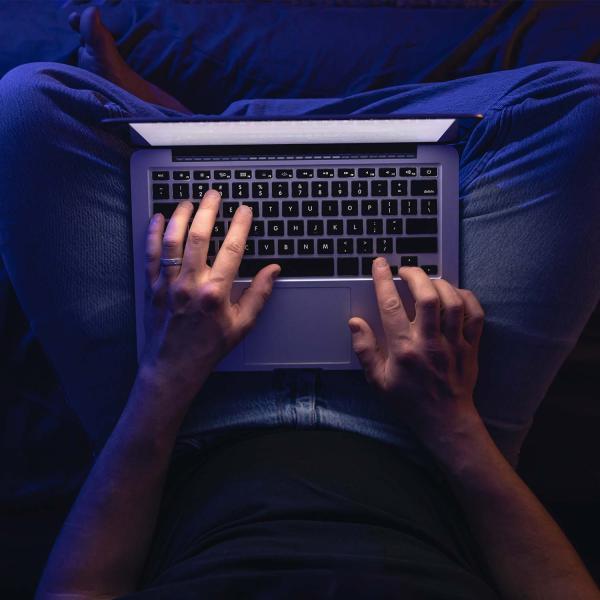
Close up of hands on a laptop keyboard at night

Circadian lighting in Ocean Grove

Sacred Electrical offers circadian lighting in Ocean Grove for homeowners who want to take a more considered approach to the lighting they use throughout the day and evening. Light plays many important roles in our body. Light regulate our circadian rhythm via the internal body clock that helps regulate our sleep and wake cycle. Light also regulates our hormones and metabolism. Through thoughtful bedroom lighting design, blue light reduction and carefully selected lighting, Sean can help you create a home lighting environment that better reflects the natural changes in light throughout the day. Sacred Electrical also services Barwon Heads, Torquay, Armstrong Creek and the Bellarine Peninsula.

Lighting is an area Sean is particularly passionate about. Sacred Electrical’s approach looks beyond simply making a room brighter. It considers the colour and quality of artificial light, how the light is designed, when that light is being used and how lighting choices can better support the way we naturally experience light from daytime through to night.

How circadian rhythm lighting works

Our natural light environment changes throughout the day. Bright daylight provides different light cues from the warmer, dimmer light we naturally experience as evening approaches.

Circadian rhythm lighting takes these natural changes into consideration when planning artificial lighting for the home. The aim is to use lighting more thoughtfully throughout the day and reduce exposure to bright, blue-rich artificial light when it is not needed.

Blue light reduction and bedroom lighting design

Blue light is naturally present in daylight, but it is also produced by artificial light sources and screens. Sacred Electrical’s interest in blue light reduction focuses particularly on artificial lighting and the way we use it before and after sunset.

This does not necessarily mean removing blue light altogether. It means thinking about when different types of light are appropriate.

A thoughtful bedroom lighting design can look at where lights are positioned, how bright they need to be and the type of light used before bed. Instead of relying on one bright overhead light for every situation, different lighting can be considered for different times and activities.

Our bedroom lighting installation service can put that plan into practice, with the electrical work and lighting locations considered together.

Human centric lighting for everyday living in Ocean Grove

Human centric lighting puts people and the way they use a space at the centre of the lighting plan. For Sacred Electrical, this means looking beyond whether a fitting simply produces enough light. We can consider how a room is used, what time of day it is generally occupied and whether different lighting options would make sense at different times.

A circadian lighting installation can incorporate different lighting choices across bedrooms, living areas and other parts of your home. Sean can discuss how you use each space and look at practical ways to introduce more considered lighting. This may involve the type of lighting selected, where fittings are positioned and how different lights are used during the day and evening.

Talk to Sean about circadian lighting

If you are interested in changing the way you light your home, talk to Sean at Sacred Electrical about circadian lighting in Ocean Grove. Whether you are renovating, reconsidering your bedroom lighting or simply want to learn more about your options, we can help you take a more thoughtful approach to artificial light.

Sacred Electrical’s interest in the home environment also extends to electromagnetic fields. Explore our EMF assessments service if you want to better understand electromagnetic fields around your property, or visit EMF shielding and solutions to learn about practical options for addressing identified sources.

Contact Sacred Electrical to discuss circadian rhythm lighting, blue light reduction and residential lighting options in Ocean Grove, Barwon Heads, Torquay, Armstrong Creek or the Bellarine Peninsula.
FAQs
What is blue light?

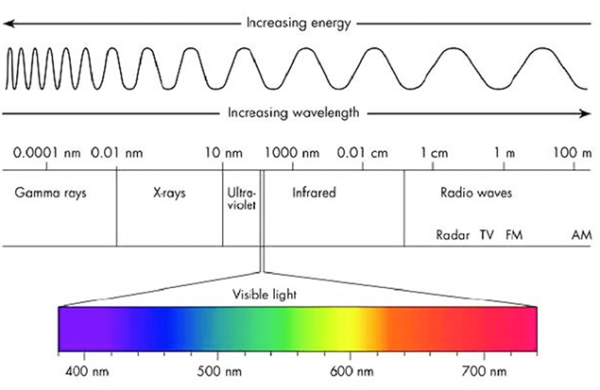
Blue light is part of the visible light spectrum, with wavelengths of approximately 380 to 500 nanometres. The visible spectrum for humans extends from approximately 380 to 700 nanometres.

Blue light occurs naturally in sunlight and is most prominent around the middle of the day. We are also exposed to artificial blue light through modern LED lighting, phones, laptops, tablets, televisions and other screens.

The important distinction is when we are exposed to it. Blue light is a natural part of daytime. Our approach to circadian lighting is about creating a better relationship between the artificial light in our homes and the natural day and night cycle.

Blue light diagram

How does blue light interact with the body?

Light enters the body via the skin and the eyes. Our skin and eyes have melanopsin in them, which helps communicate information about light to the brain’s circadian system.

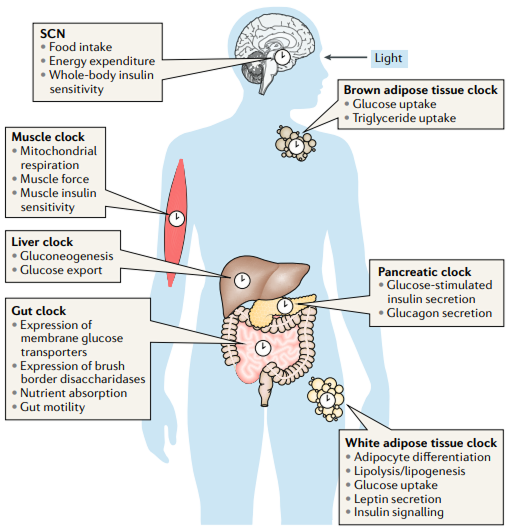
Light signals penetrate the retina and then reach the suprachiasmatic nucleus, or SCN, which acts as the body’s master clock. The body’s master clock controls all the clocks in your body, for example your gut clock or your circadian clock.

That is why light is much more than something that helps us see. The colour, brightness and timing of light all provide important information to the body. Circadian rhythm lighting takes these natural light signals into consideration when planning artificial lighting for the home.

How does blue light interact with the body

What are the effects of blue light on the human body?

The effects of blue light depend greatly on the time of day. Blue-rich light is a normal and useful part of daytime light exposure, when our bodies are naturally geared towards being awake and alert.

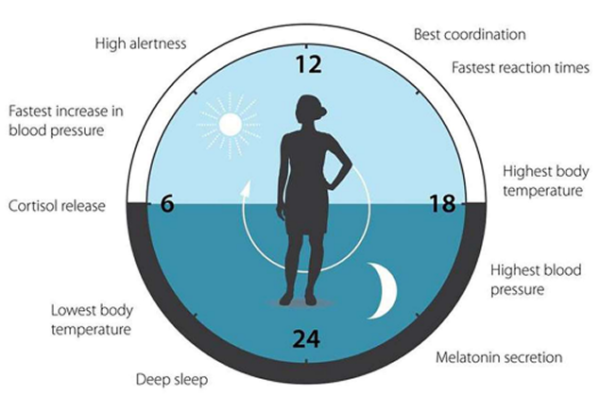
The bigger concern is exposure to bright, blue-rich artificial polarized light during the day and especially at night or early morning. Evening light can affect the body’s circadian timing, suppress melatonin and increase alertness, potentially making it harder to prepare for sleep.

Modern LED lighting can also vary considerably in its spectrum and flicker characteristics. This is why we look at more than whether a light is simply bright enough. Human centric lighting considers the type of light, when you are exposed to it and how it fits with the natural day and night cycle.

What are the effects of blue light

How can we reduce blue light at night?

There are several practical ways to reduce artificial blue light exposure in the evening.

One of the first places to look is the lighting in your home. We can replace suitable LED lighting with full-spectrum or blue-light-reducing alternatives and design warmer evening lighting through circadian lighting installation and bedroom lighting design.

Screens are another consideration. Options include using red-light filters or blue-light filters on phones, tablets and computers, or placing blue-light-filtering glass or plastic over a screen.

Blue-light-blocking glasses are another option Sean discusses, with different lenses available for daytime and nighttime use. Reducing unnecessary screen exposure and using lower, warmer lighting at night can also help create a very different light environment from the bright, blue-rich light we want during the day.

What lighting should I consider for a bedroom?

Bedroom lighting design can include warmer, lower-level lighting for use during the evening, with the brightness, placement and purpose of each light considered. Sacred Electrical can help plan a bedroom lighting installation around how you use the room rather than relying on a single lighting solution.

Is all LED lighting the same?

No. LED lighting products can differ in characteristics including colour temperature, colour spectrum, flicker and how they are switched. Sacred Electrical considers these characteristics when discussing lighting choices and blue light reduction for the home.

Sacred Electrical icon

Ready to create a safer, healthier and more functional space with Sacred Electrical?

From everyday electrical work, repairs and renovations to lighting, EV chargers, pool and spa wiring, emergency call outs, EMF assessments and shielding solutions, Sacred Electrical is here to help you make informed, practical updates that support your home, business and wellbeing.

Get in touch

Research

I’m not your average electrician. I’ve been researching how light effects the human body for years now and have been assuring it aligns to science. All the studies can be seen below.

Sources about blue light and its interaction with the human body

  1. Melatonin and insulin are solar metronomes, Dr. Jack Kruse June 25th 2016
  2. Hypoxia #4: Red Light, Blue Light, 1.2.3, Dr Jack Kruse February 20th 2020
  3. Quantum Biology #12: Do We need DNA to tell time, Dr. Jack Kruse 21st July 2013

Studies about artificial lights effects on circadian rhythms and melatonin

  1. Effects of light on human circadian rhythms sleep and mood, Blume, C., Garbazza, C., & Spitschan, M. (2019). Effects of light on human circadian rhythms, sleep and mood. Somnologie, 23(3), 147–156
  2. Impact of daytime light exposure on sleep and mood in office workers, Figueiro, M. G., Steverson, B., Heerwagen, J., Kampschroer, K., Hunter, C. M., Gonzales, K., Plitnick, B., & Rea, M. S. (2017). The impact of daytime light exposure on sleep and mood in office workers. Sleep Health, 3(3), 204–215.
  3. Impact of windows and daylight exposure on overall health and sleep quality of office workers, Boubekri, M., Cheung, I. N., Reid, K. J., Wang, C. H., & Zee, P. C. (2020). Impact of windows and daylight exposure on overall health and sleep quality of office workers: A case-control pilot study. Journal of Clinical Sleep Medicine, 16(2), 203–209.
  4. Melatonin and insulin are solar metronomes, Dr. Jack Kruse June 25th 2016
  5. J. K. Phillips, A, Vidafar, P & Burns, A 2019, ‘High sensitivity and interindividual variability in the response of the human circadian system to evening light‘, Proceedings of the National Academy of Sciences,Vol. 116 | No. 24 June 11, 2019
  6. Association between light at night, melatonin secretion, sleep deprivation, and the internal clock: Health impacts and mechanisms of circadian disruption, Yvan Touitou, Alain Reinberg, David Touitou, March 2017, Life Sciences 173(Suppl. 3):94-206
  7. Effects of Light on Cognitive Brain Responses Depend on Circadian Phase and Sleep Homeostasis, Vandewalle, Gilles, her, Simon N.Wuillaume, Catherine Balteau, Evelyne, Degueldre, Christian Luxen, André Dirk, Derk-Jan Maquet, Pierre, Journal of biological rhythms, vol 26 no 23, June 2011, pg. 249 – 259
  8. Evening light exposure to computer screens disrupts human sleep, biological rhythms, and attention abilities, A. Green, M. Cohen-Zion, A. Haim & Y. Dagan, Pg 855-865 | Received 15 Mar 2017, Accepted 26 Apr 2017, Published online: 26 May 2017
  9. Recommendations for daytime, evening, and nighttime indoor light exposure to best support physiology, sleep, and wakefulness in healthy adults, Timothy M. Brown,George C. Brainard, Christian Cajochen, Charles A. Czeisler, John P. Hanifin, Steven W. Lockley, Kenneth P. Wright Jr

Studies on effect of LED lights flicker

  1. Potential Biological and Ecological Effects of Flickering Artificial Light, Richard Inger, Jonathan Bennie, Thomas W Davies, Kevin J Gaston, May 2014
  2. Influence of Light Emitting Diode-Derived Blue Light Overexposure on Mouse Ocular Surface, Hyo Seok Lee, Lian Cui, Ying Li, Ji Suk Choi, Joo-Hee Choi, Zhengri Li, Ga Eon Kim, Won Choi, Kyung Chul Yoon

Studies relating to increased insulin and blood glucose

  1. Effects of Cell Phone Radiofrequency Signal Exposure on Brain Glucose Metabolism, Nora D Volkow, Dardo Tomasi, Gene-Jack Wang, Paul Vaska, Joanna S Fowler, Frank Telang, Dave Alexoff, Jean Logan, Christopher Wong., JAMA. 2011 Feb 23;305(8):808-13. doi: 10.1001/jama.2011.186. PMID: 21343580; PMCID: PMC3184892
  2. Artificial Light at Night and Type 2 Diabetes Mellitus, Jong-Ha Baek, Yong Zhu, Chandra L. Jackson, Yong-Moon Mark Pararkfg,Diabetes & Metabolism Journal 2024;48(5):847-863. DOI: https://doi.org/10.4093/dmj.2024.0237, Published online: September 1, 2024
  3. Morning and Evening Blue-Enriched Light Exposure Alters Metabolic Function in Normal Weight Adults, Ivy N. Cheung, Phyllis C. Zee, Dov Shalman, Roneil G. Malkani, Joseph Kang, Kathryn J. Reid, Published: May 18, 2016